
Signals · Episode 5
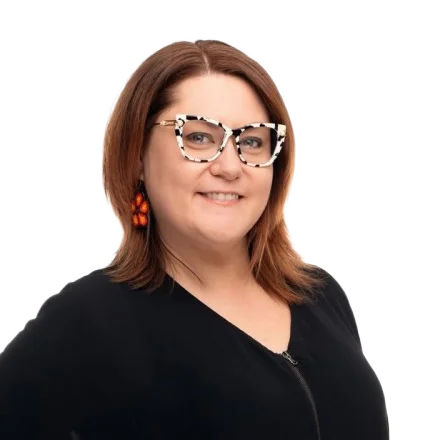
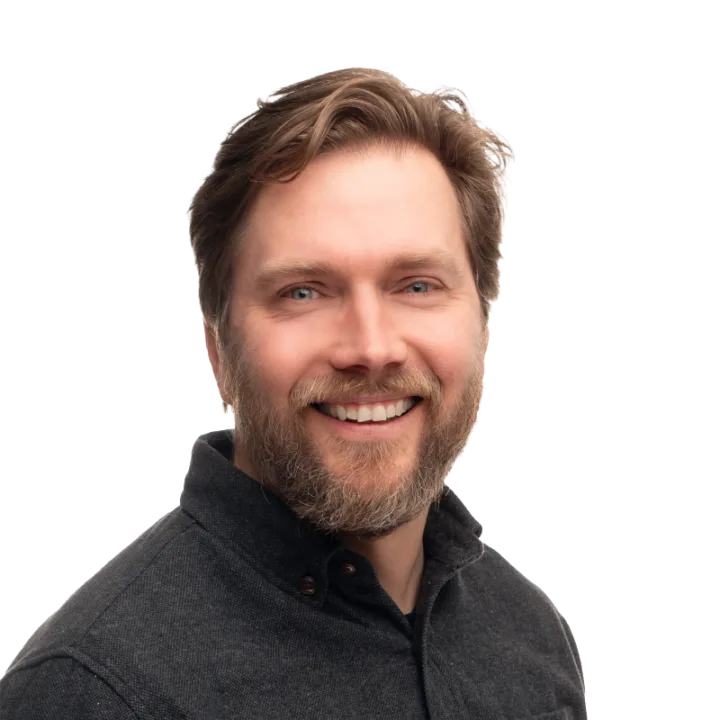
Rachael Steinke & Fred Reibin
Rachael Steinke, Chief Executive Officer
Fred Reibin, Director of Community Impact
Saskatoon Community Foundation · Saskatoon, SK
People aren't necessarily looking for more communication. They're looking for more meaningful connection.
01What's one pattern you've noticed in how donors or volunteers engage with your foundation in the last year that surprised you, in a good way or a hard way? #Link to question 1
One of the more interesting shifts we've noticed is how much people are gravitating toward trusted, personal connections.
In an increasingly digital world, where people are inundated with information, requests for support, and competing messages, I think there's a growing skepticism about who and what to trust. We're seeing donors rely more heavily on trusted advisors, friends, colleagues, and established relationships to help inform their philanthropic decisions.
We've also noticed an increased desire to connect in person. People want to attend events, get together for coffee, and have meaningful conversations. Even when we're out in the community, people will often express their appreciation for simply having the opportunity to connect.
I think there's something really interesting happening around institutional trust. People may be increasingly skeptical of institutions or online messaging, but they still place enormous value on relationships with people and organizations they know and trust. That's a real opportunity for community foundations because we're deeply rooted in the communities we serve.
One of my biggest takeaways is that people aren't necessarily looking for more communication. They're looking for more meaningful connection.
And perhaps that's the reminder for all of us. Philanthropy is fundamentally about people, relationships, and trust. While our tools and technology continue to evolve, those fundamentals haven't changed.
02If you could change one thing about how your team builds and maintains relationships with supporters, what would it be? #Link to question 2
I'd like us to rely a little less on mass communication through our CRM and double down on building authentic, direct relationships with the people who support our work.
That's not to suggest technology doesn't have an important role. It absolutely does, particularly when you're managing a large and diverse donor base. But I do think there's a risk that we start to confuse communicating with people with actually building relationships.
I'd love to see us be more intentional about personal engagement. Picking up the phone without an ask attached, meeting someone for coffee, having conversations about what's happening in the community, or simply taking the time to understand what matters to someone.
I also think we need to broaden how we think about relationships and stewardship. Some of the most valuable people connected to our foundation aren't necessarily our largest donors. They're volunteers, advocates, professional advisors, connectors, and community champions who help us build relationships, understand community needs, and create opportunities for impact.
And I don't think this should sit solely with the philanthropy team. Relationship-building is something our entire organization needs to own, from our Board and leadership team to the people working directly with community organizations. Each of those relationships contributes to our understanding of the community and strengthens our ability to respond to its needs.
The challenge, of course, is scale. We have a large donor base, and meaningful relationship-building requires time and capacity. But I genuinely believe that investing more intentionally in those relationships would pay off, not just financially, but in trust, engagement, community knowledge, and long-term impact.
I'd love us to get better at measuring the strength and depth of our relationships, not simply the number of touchpoints or communications we generate.
Ultimately, I think we need to spend a little less time managing relationships through systems and a little more time actually being in relationships with people.
03What's the next experiment, conversation, or shift you're paying attention to in 2026? #Link to question 3
Impact investing, without question.
I think community foundations are at a really interesting point in our evolution, where we're starting to challenge ourselves to think differently about how we leverage the financial assets entrusted to us.
Traditionally, our model has been relatively straightforward. Donors contribute funds, we invest those assets to generate returns, and a portion of those returns supports charitable granting in the community. It's an incredibly important model and one that has served communities well for generations.
But I think there's a bigger question we need to be asking. What if we could leverage not just the returns on our investments, but the investments themselves, to create positive social change?
At the Saskatoon Community Foundation, we've been doing a considerable amount of work in this area. We've established an impact investing policy that allows for up to 5% of our investment assets to be allocated toward investments that generate both financial returns and intentional social impact.
We're exploring a few different approaches, including traditional investment opportunities with measurable social impact, partnerships with intermediaries who are already doing this work, and more direct community investments that could help respond to local needs.
What's interesting is that this work challenges some of our traditional thinking about the role of a community foundation. We're not simply asking how we can generate more dollars to grant. We're asking how we can use our existing financial position, relationships, and community knowledge to become more active partners in creating solutions.
Housing is a great example. Like many communities, Saskatoon is facing significant challenges around housing affordability and homelessness. We're already involved in conversations about how philanthropy, private capital, government, and community organizations can work together to support solutions. Impact investing creates another opportunity to participate in those conversations, potentially bringing new forms of capital to challenges that traditional granting alone isn't going to solve.
I also see a really natural connection to the work we're doing through Vital Signs and our broader community leadership role. We're gathering research and data to better understand what's happening in our community. We're creating opportunities to bring people together through Vital Conversations.
The next question is how we translate that knowledge and those relationships into meaningful action.
Impact investing is one potential tool to help us do that.
Of course, this isn't without its challenges. We have a significant fiduciary responsibility to protect the assets that have been entrusted to us, and we need to be thoughtful about risk, financial returns, liquidity, governance, and measuring actual impact. We've been connecting with other community foundations, learning from their experiences, and having some really good, and sometimes challenging, conversations with our Investment Committee and Board about what responsible implementation looks like.
I also think it's important to recognize that impact investing isn't a replacement for granting. There will always be critical community needs that don't generate a financial return, and philanthropy has an essential role in supporting those needs. This is about adding another tool to the toolbox.
What excites me most is the broader opportunity for community foundations to think differently about our role. We have significant financial assets, deep community relationships, access to research and information, and the ability to bring people together who might not otherwise be at the same table.
I think there's tremendous untapped potential in bringing all of those things together.
For me, the question is becoming less about how much money we can grant into the community and more about how we can leverage every asset available to us, financial, relational, and intellectual, to create the kind of community we all want to live in.
And I think that's a pretty exciting shift for our sector.