

Signals · Episode 2
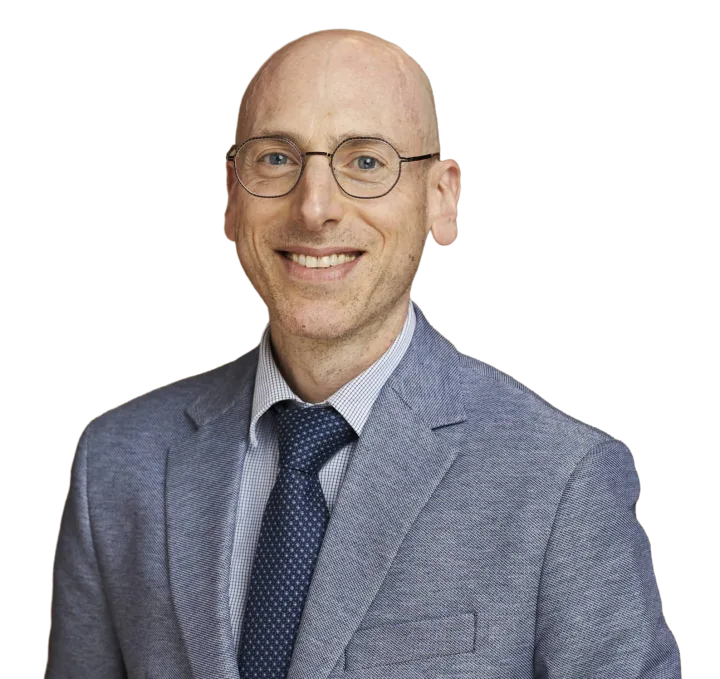
Javier Schwersensky
Javier Schwersensky, President & CEO
The University of Winnipeg Foundation · Winnipeg, MB
The person who has given $50 a year for ten or twenty years also deserves to be treated as a VIP.
01What's one pattern you've noticed in how donors or volunteers engage with your foundation in the last year that surprised you, in a good way or a hard way? #Link to question 1
There are two distinct changes we see unfolding in the philanthropic space. One is the exponential growth of Donor Advised Funds (DAFs), which in North America allow individuals to maximize their tax advantage. Because DAFs are set up as purpose-built foundations, the gifts we receive now carry an intermediary layer, which makes donor recognition and stewardship more difficult.
The other is behavioral: donors expect to participate far beyond providing financial support. They want to see the impact of their donation in real time, either by participating directly or by connecting with the recipients of their generosity. The era of 'here is the money, use it well' is over. It has been replaced by 'show me how you will spend the money, and let me be there when you do.'
02If you could change one thing about how the sector approaches relationships with supporters, what would it be? #Link to question 2
Nearly 90 percent of the donations charities receive come from 10 percent of their supporters, so most of the sector's attention goes to that 10 percent. But the person who has given $50 a year for ten or twenty years also deserves to be treated as a VIP. I make a point of meeting with these loyal donors personally, to thank them for their trust over so many years.
03What's the next experiment, conversation, or shift you're paying attention to in 2026? #Link to question 3
I tried to think of a shift for 2026 that does not involve AI, but I could not. Agentic fundraising is taking shape, and we are thinking hard about how this new virtual fundraiser can be useful without losing the human element. Providing timely, relevant information to a large number of donors at once makes sense, but someone still has to be available to follow up, call, or meet with people directly. Managing the technology, the staffing, and the ethics of it will take most of my attention this year.